Overview
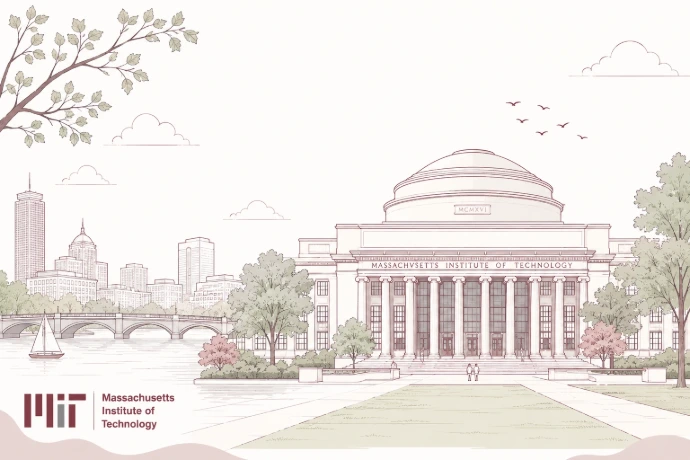
Situated in Cambridge, Massachusetts, just across the Charles River from Boston, the Massachusetts Institute of Technology (MIT) stands as an undisputed titan of global higher education. Established in 1861 to accelerate the United States' industrial revolution, its 166-acre urban campus harmoniously blends iconic neoclassical architecture with hyper-modern research facilities. Operating under the motto "Mens et Manus" (Mind and Hand), MIT acts as the central nervous system of global technological and industrial evolution. Today, the university boasts an incredibly focused academic population of approximately 11,000+ students, including a highly diverse international cohort of roughly 3,440+ students representing 130+ nations. International students make up 12% of the undergraduate population and 41% of the graduate population.
#1
QS 2027 Rank
#1
TUC 2027 Rank
#1
North America (TUC)
Stats
● Career and Post-Grad Placement: MIT reports an extraordinary overall placement rate, with undergraduates entering the workforce directly recruited heavily by top-tier quant firms, quantitative hedge funds, and tech giants. For those pursuing further academia, a massive percentage secure admission to the world's top graduate programs, while a staggering number of alumni ultimately launch their own ventures, fueling Kendall Square's booming economic ecosystem.
● Professor Quality: With an incredibly favorable student-to-faculty ratio, students are instructed by the active creators of modern scientific paradigms, including numerous Nobel Laureates, Turing Award winners, and Fields Medalists.
● Study Environment: Often summarized by the phrase "drinking from a firehose," MIT cultivates an intense, studious atmosphere balanced by vibrant structural support and a famous "hack" culture. Student reviews praise the campus's world-class labs, the Undergraduate Research Opportunities Program (UROP) offering a highly collaborative culture, and over 300 active student clubs that easily integrate international students into the community.
Courses
57
Primary UG
100+
Doctoral (PHD)
100+
Masters (PG)
All
Masters (English)
The most popular and highest-ranked programs include Computer Science (Course 6),
Mechanical Engineering (Course 2), Mathematics (Course 18), Physics (Course 8), and
Business Administration. Recently, MIT has undergone a profound pedagogical shift by
expanding its interdisciplinary foundations. Institutions like the Stephen A. Schwarzman College
of Computing are designed to break down traditional disciplinary boundaries, ensuring students
receive a deep interdisciplinary foundation in AI, computing, and liberal arts before specializing
in deep-tech or humanities
Navigating Admissions: The International Student Pathway
While MIT evaluates domestic and international students in the same applicant pool, the gateway for international students is brutally competitive. MIT utilizes a holistic evaluation process, resulting in an overall acceptance rate hovering around an incredibly tight around 4.7% (almost 5%).
The step-by-step admission process requires:
1. Eligibility: Applicants must be non-U.S. citizens or permanent residents to be classified as international. MIT does not apply caps or quotas to specific countries, evaluating each student contextually based on their region's educational system.
2. Academic Excellence: Undergraduates typically need elite academic credentials, with admitted students often scoring between 1520 and 1580 on the SAT, or 34 to 36 on the ACT.
3. Language Competence: For non-native English speakers, demonstrating English proficiency is strongly recommended. Highly competitive applicants often showcase a TOEFL iBT score of 105 or higher (minimum 90), or an IELTS score of 7.5 or higher (minimum 7.0).
4. Standardized Examinations: MIT has fully reinstated its standardized testing requirement. All applicants must submit SAT or ACT scores. Additionally, Olympiad medals (like the IMO or IPhO) and hands-on projects solving real-world problems are heavily valued signals of academic depth for international candidates.
5. Documentation & Interviews: Applications require biographical forms, academic transcripts, specialized MIT essays, and specific recommendation letters from a math/science teacher and a humanities/language teacher. An alumni interview is also standard if available in the applicant's region.
For more Information and personalised answers please join our Discord server https://discord.gg/MtdNBUwF2b (all documents needed and other important things required for your application is posted on the server)
Financial Architecture:
Budget Split (In USD)
(This is an average data, the actual budget may vary from person to person)
Fees and Annual Budget:
Despite its massive headline sticker price, MIT represents a massive financial ROI and is structurally highly accessible for international students who qualify for aid. The annual cost of tuition for the 2026-2027 academic year stands at exactly $66,720 for standard undergraduate programs. Beyond tuition, an international student living on campus should prepare for an estimated total cost of attendance of roughly $92,760.
This covers:
● On-Campus Housing: $14,090/year.
● Meals / Food: $8,104/year.
● Books, Supplies & Personal Expenses: $3,426/year.
● Student Life Fee: $420/year.
(for more information please visit The Massachusetts Institute of Technology (MIT))
Funding the Future:
Scholarship Opportunities:
MIT offers a deep reservoir of financial aid and has one incredibly rare advantage: the admissions process is entirely need-blind for international students, meaning your financial situation will not impact your chances of acceptance.
● MIT Undergraduate Financial Aid: MIT meets 100% of demonstrated financial need for all admitted international undergraduates. As of the 2025-2026 academic year, students coming from families earning less than $200,000 annually (with typical assets) can attend MIT completely tuition-free. MIT does not offer merit-based scholarships.
● Graduate Fellowships and Assistantships: For graduate students, funding is highly departmental. The vast majority of doctoral students and many master's students receive full tuition coverage, health insurance, and a living stipend in exchange for acting as a Research Assistant (RA) or Teaching Assistant (TA).
● External Program-Specific Funding: Elite fellowships (like the Fulbright program for international students) can supplement funding, particularly for specialized degrees or non-funded master's programs.
For more scholarship updates and options please find it on our discord server https://discord.gg/MtdNBUwF2b
Why Choose MIT?
Persistent Growth and Global Velocity: If you are looking past standard brochure data, the ultimate reason to attend MIT is access to scale and velocity. The university is moving aggressively away from siloed education. Through the integration of the Schwarzman College of Computing, AI is treated as the new baseline literacy for all students, whether they are studying humanities, medicine, or engineering. Furthermore, MIT anchors the resurgence of "deep tech" and green technology in Kendall Square—often referred to as the most innovative square mile on the planet. By stepping onto this campus, you bypass the academic periphery and place yourself at the absolute epicenter of the world's most rapid technological transformation, ready to transport elite talent directly into critical global supply chains